Print Design
Phototypesetting: Type Research
Reconstructing analog composition practices to understand what digital tools made us forget.
Reconstructing analog composition practices to understand what digital tools made us forget.
The paste-up — the physical assembly of type and image on a board — was how designers worked during the phototypesetting era, roughly 1950s through 1980s. It was tedious, tactile, and unforgiving. This project asked: what happens when a contemporary designer incorporates these techniques into their process?
Phototypesetting sits in a strange gap in design history — after the era of movable type and Linotype, before the clean narrative of desktop publishing. Designers in this era received galleys of type from a typesetter, then physically cut and waxed those strips of paper onto a board themselves. Every spatial decision was made by hand, at actual size, with no undo.
It’s a period that gets overlooked, partly because the artifacts are unglamorous — yellowed boards, rubber cement, wax rollers — and partly because it was so quickly replaced. The documentary Graphic Means (2017) was the entry point for this research, and it raised a question that felt genuinely worth testing: does the constraint of physical composition change how a designer thinks?
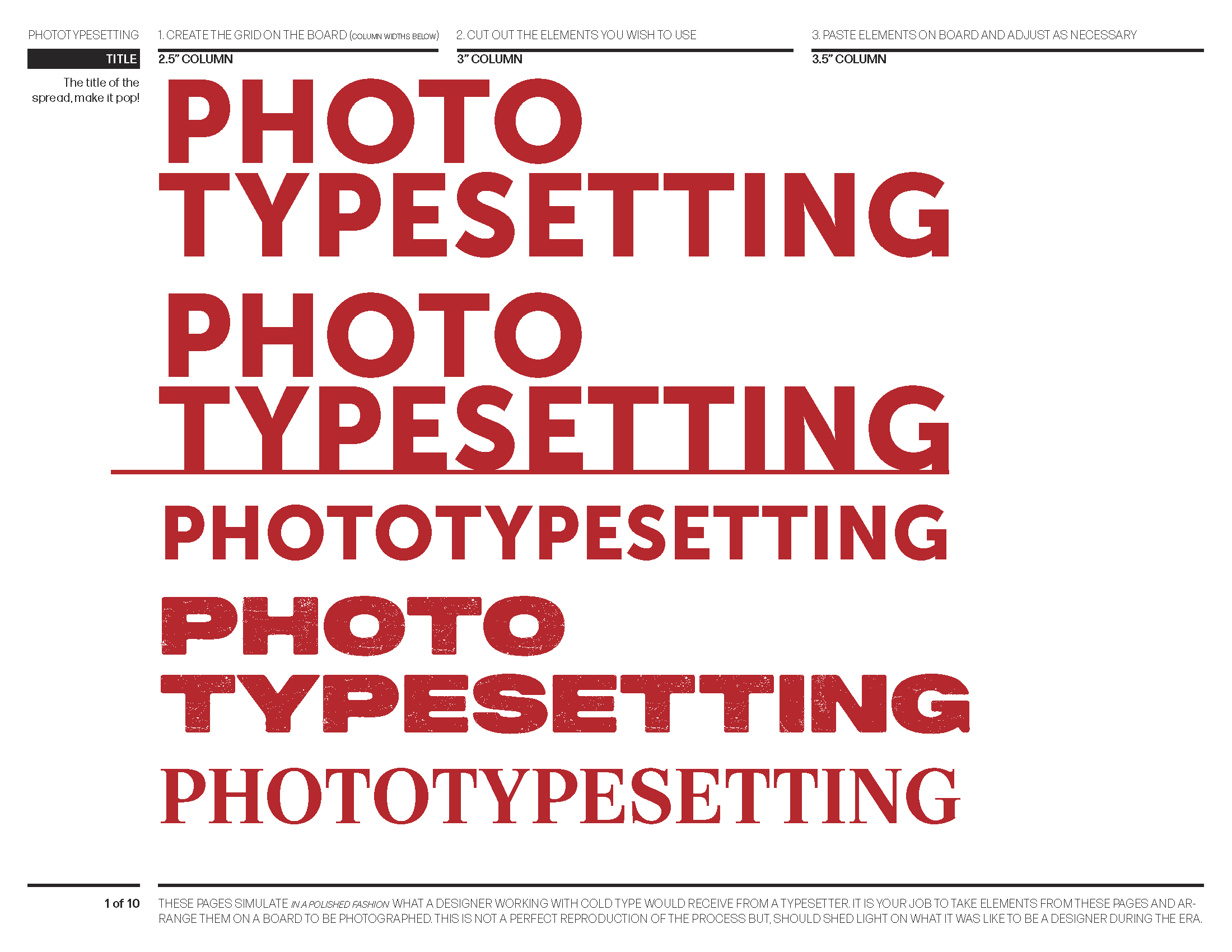
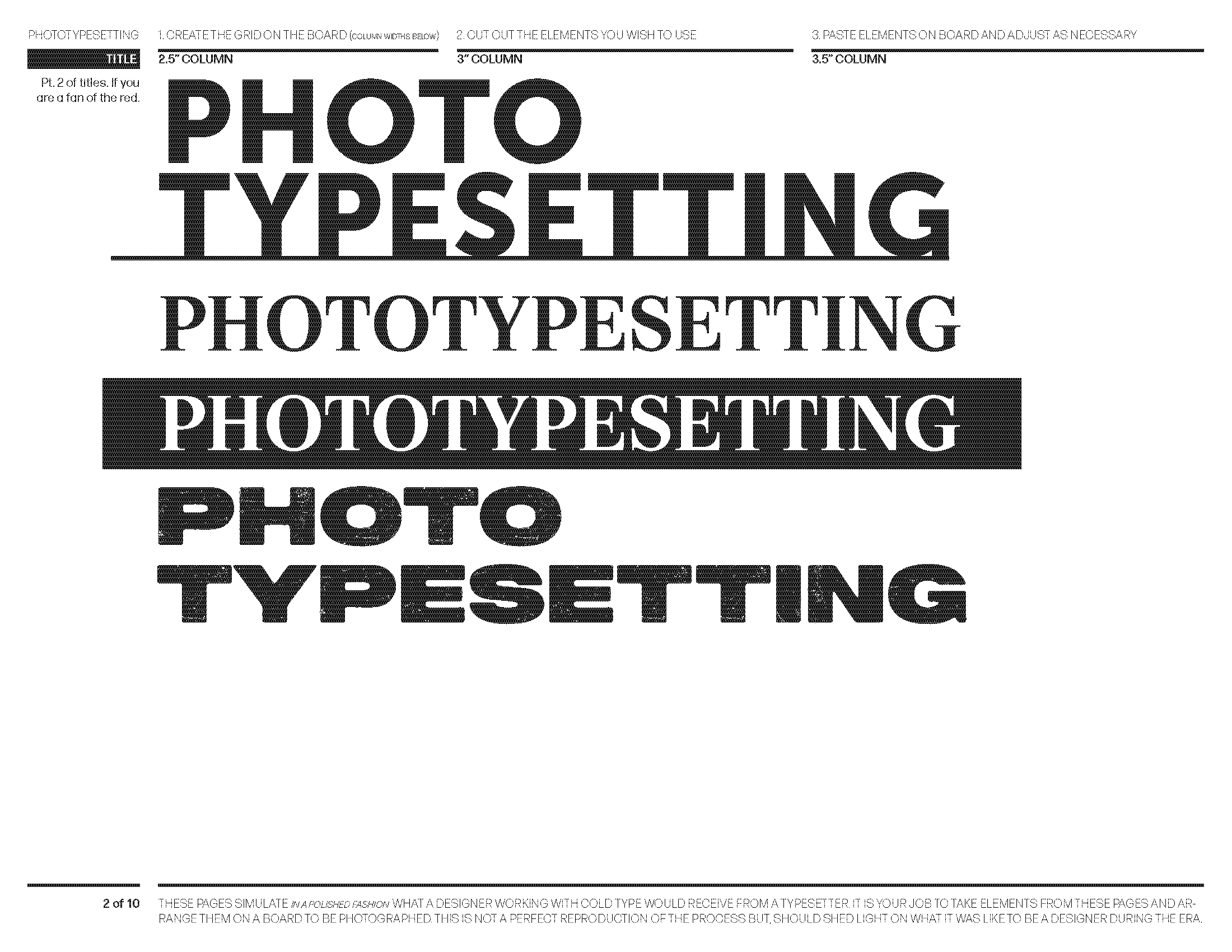
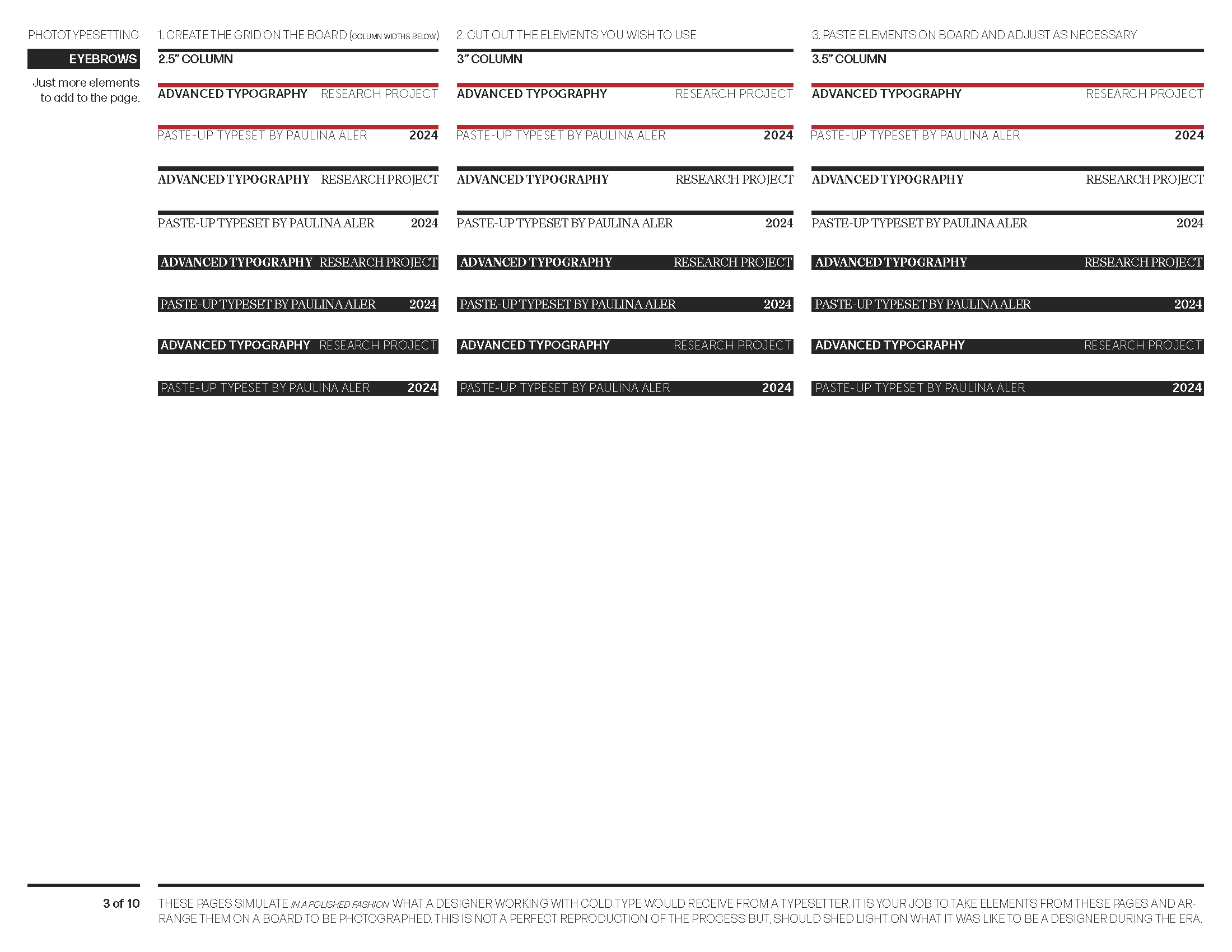
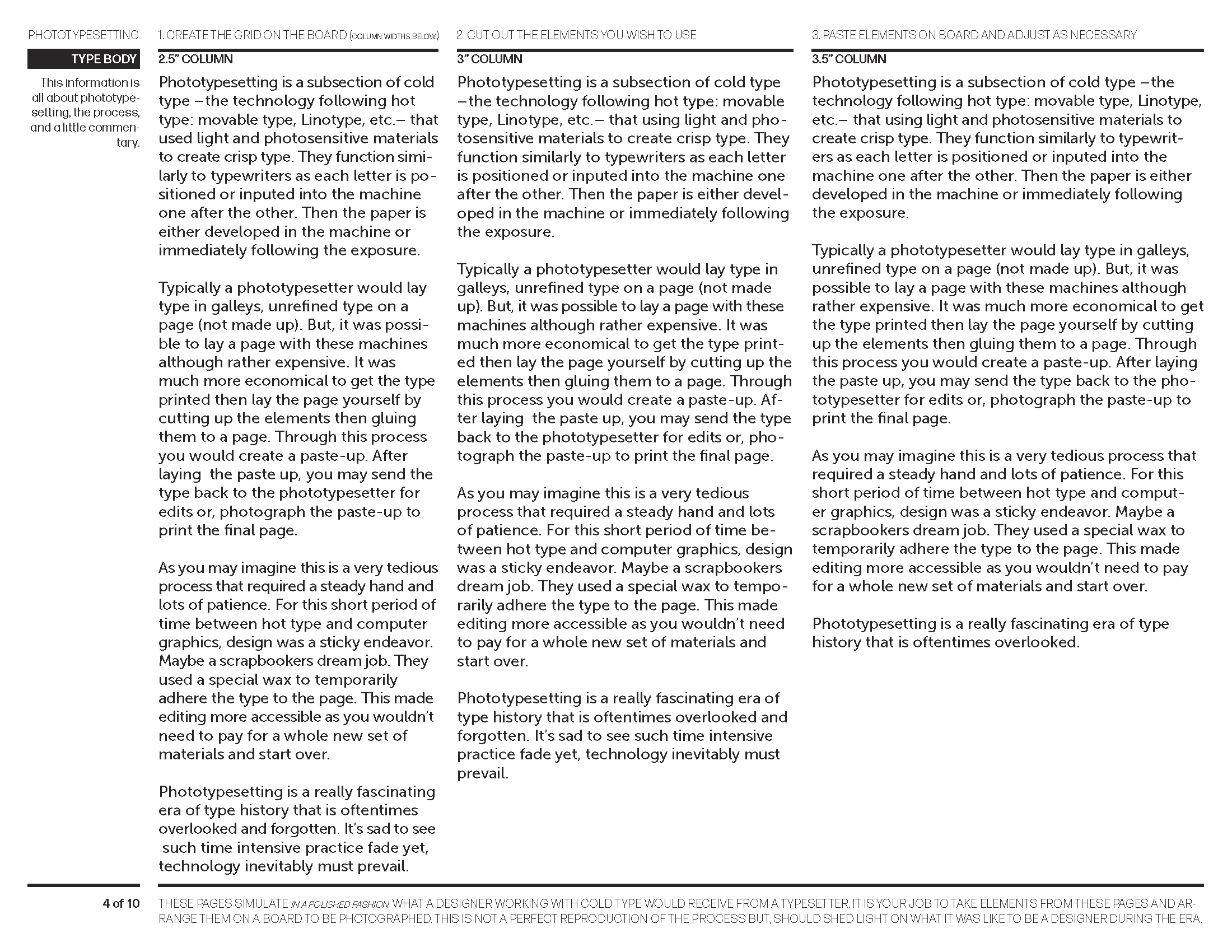
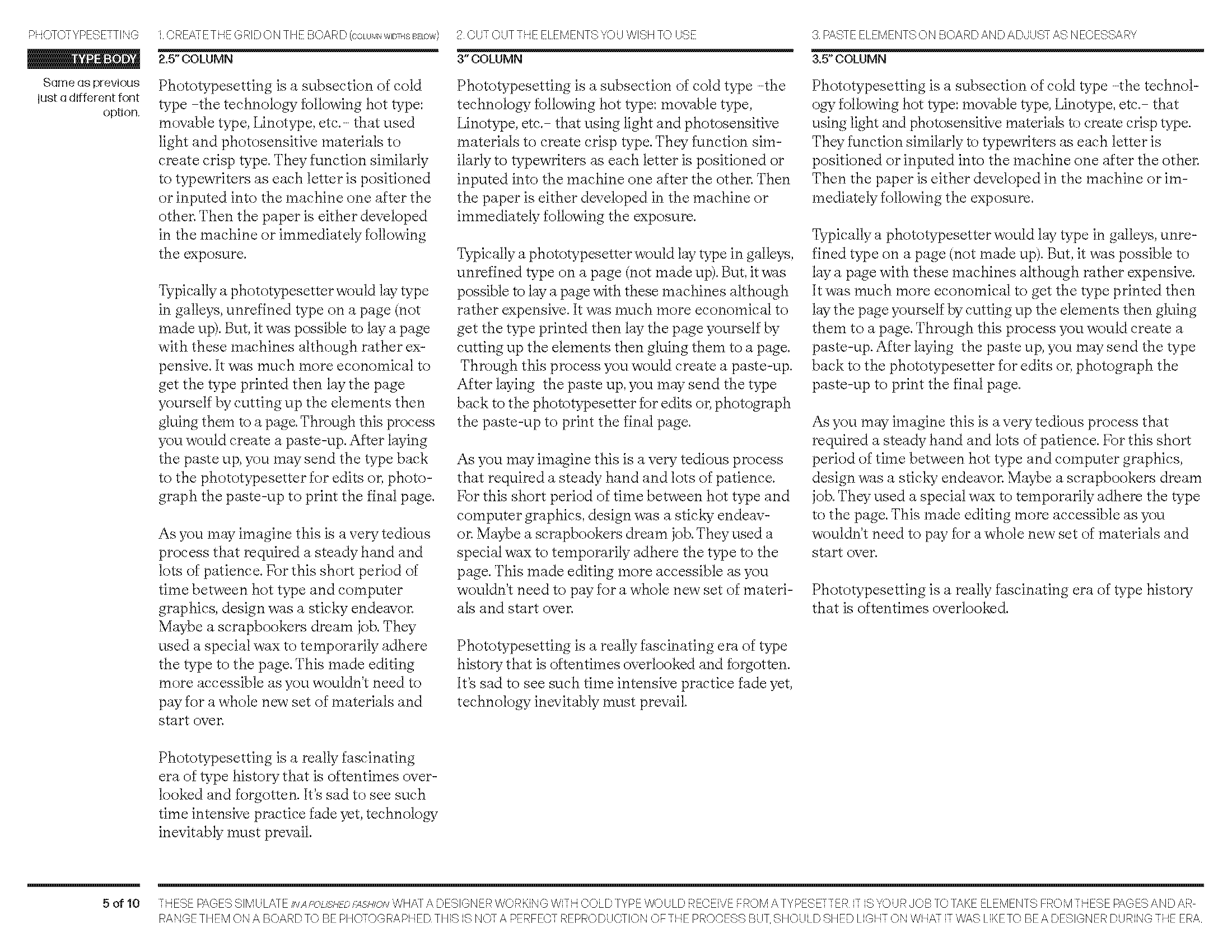
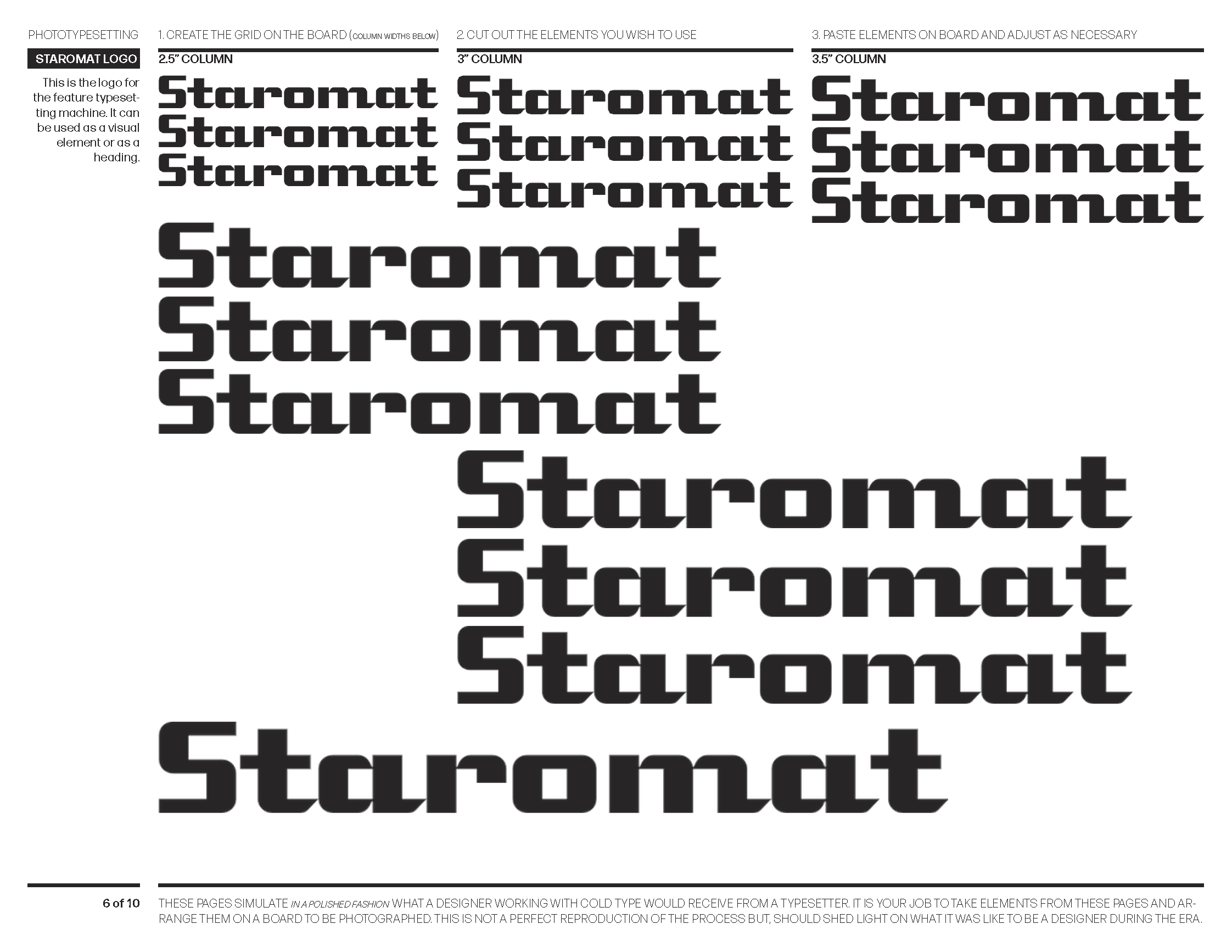
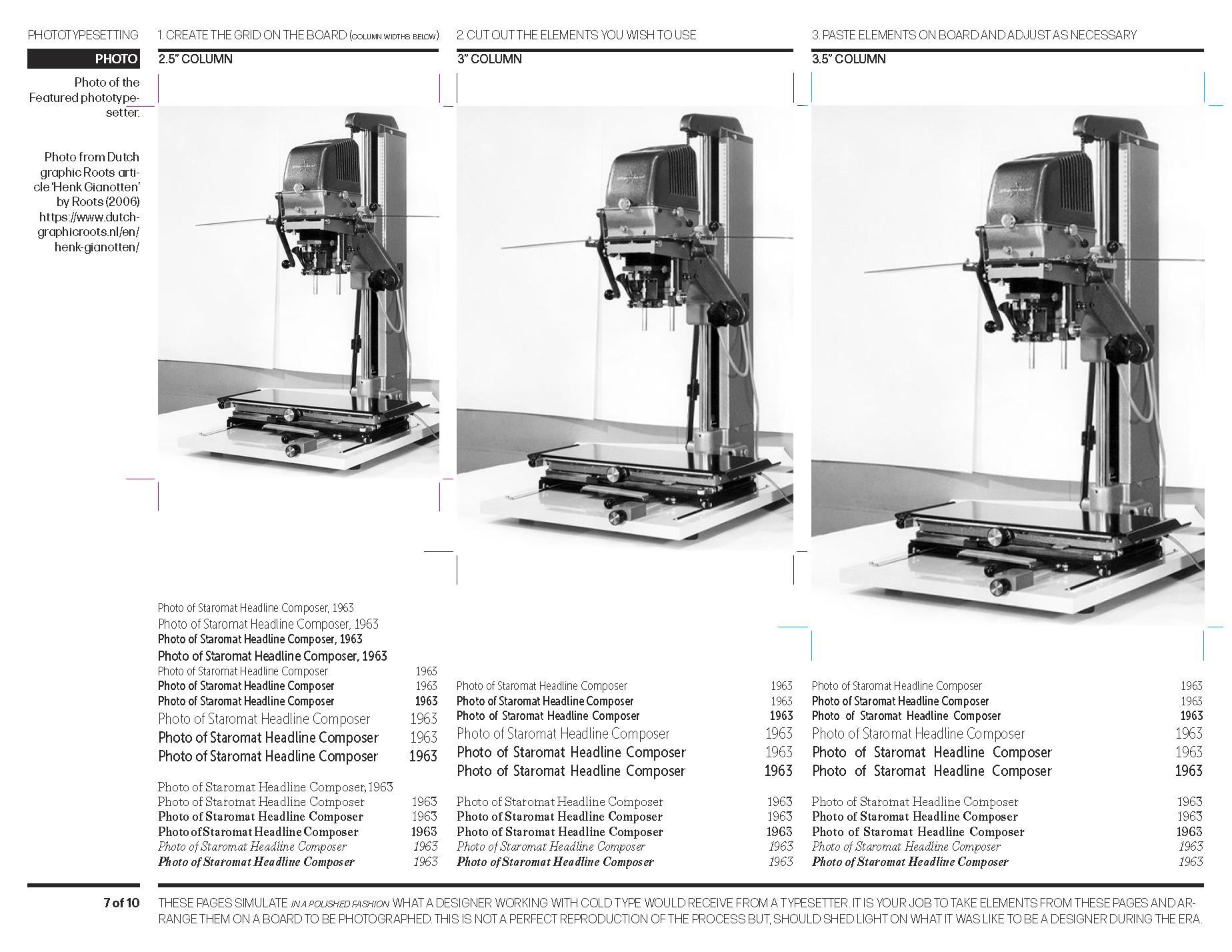
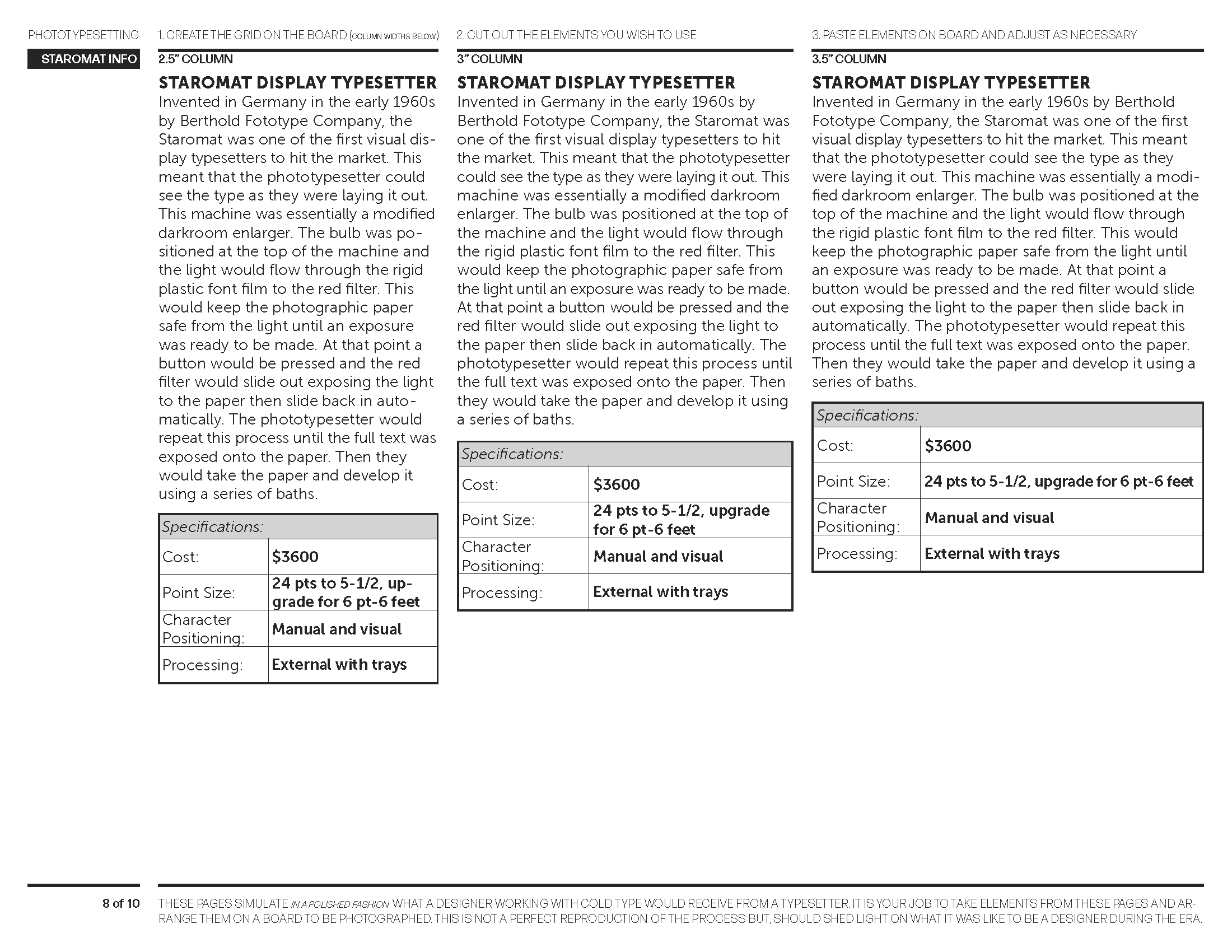
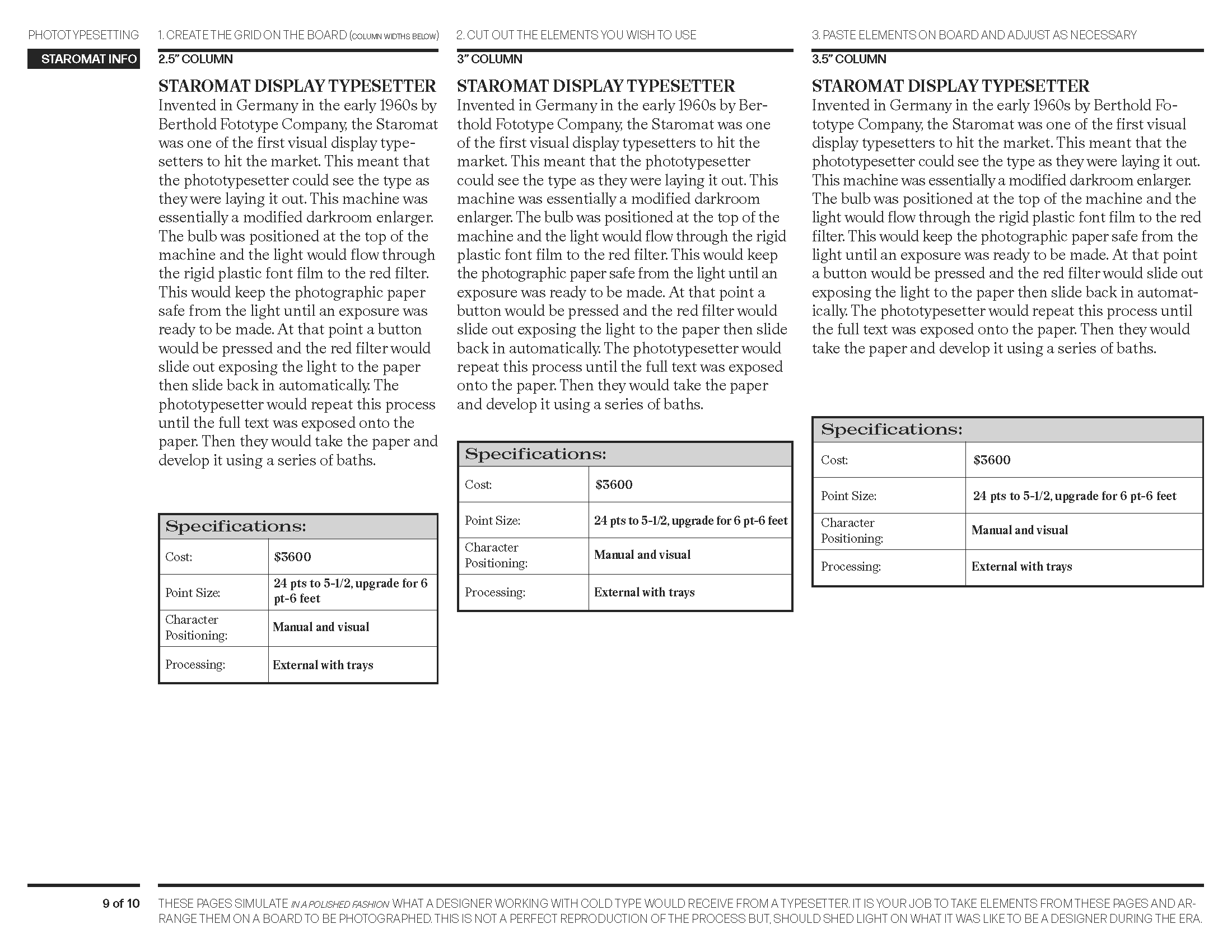
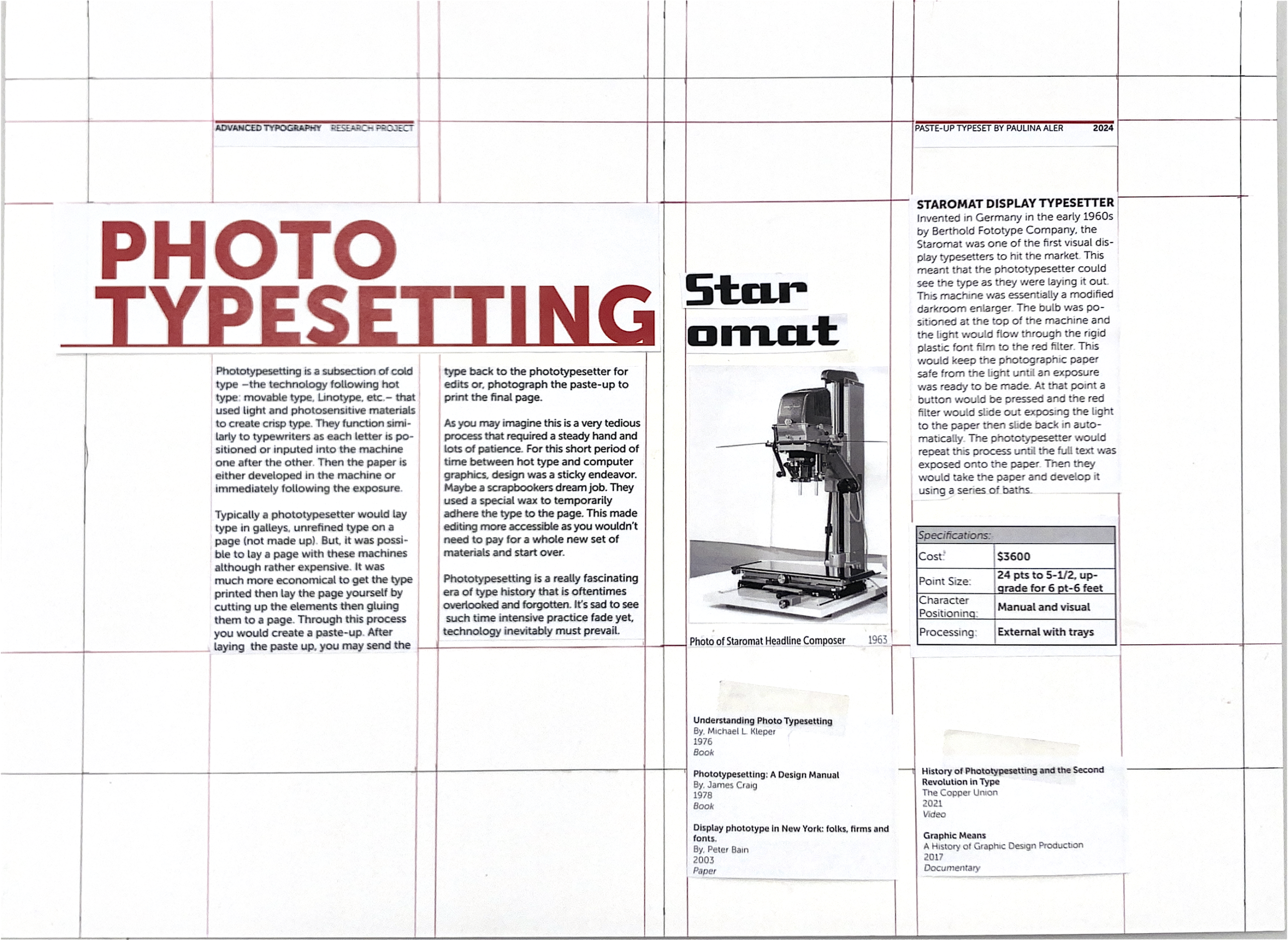
Typesetting sheets designed to simulate what a designer in the phototypesetting era would receive from a typesetter — elements to be cut, arranged, and pasted.
Material constraints introduced creative solutions that software's undo function and infinite canvas have made obsolete.
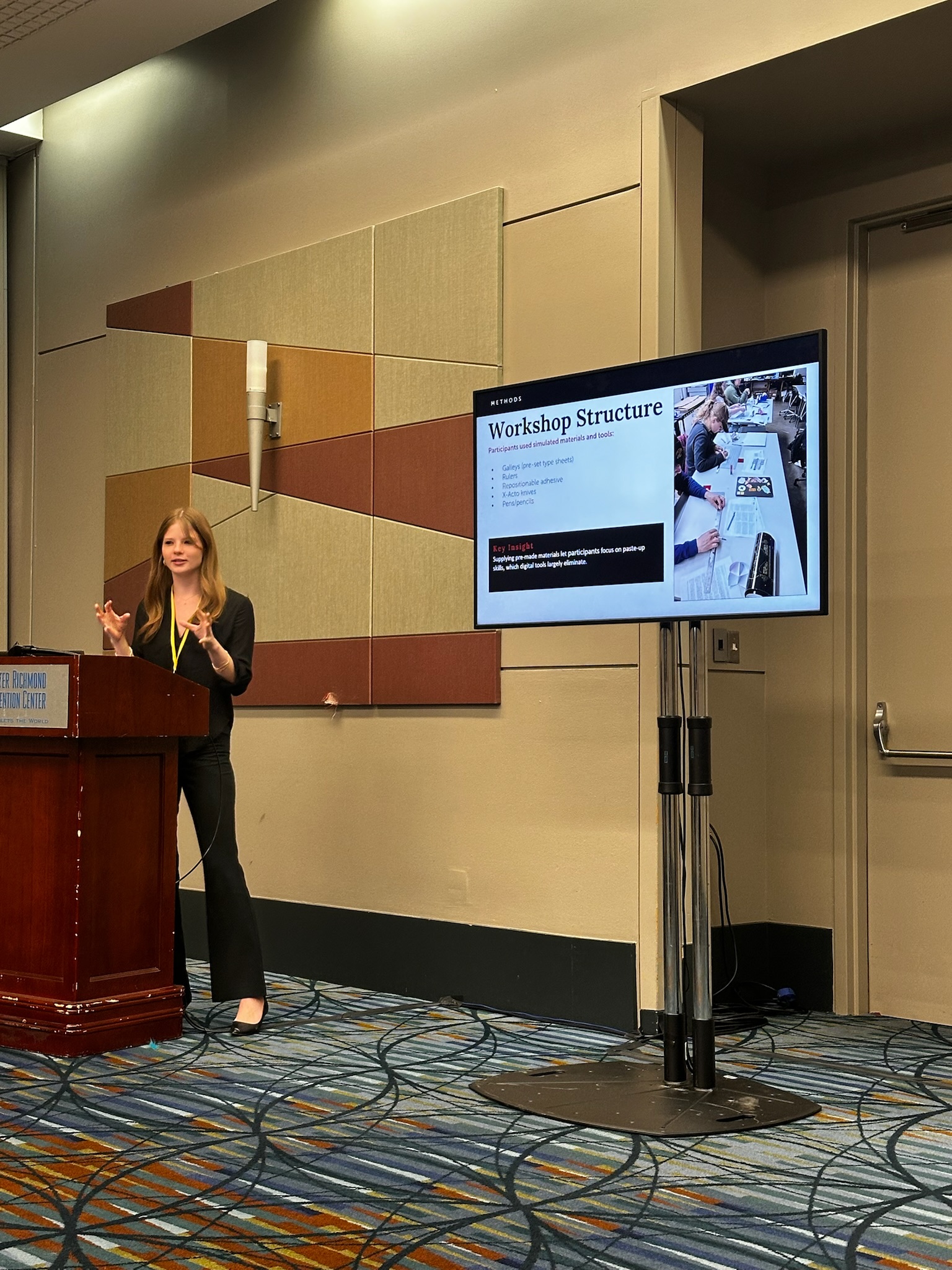
To test this, I designed a workshop. Participants were given printed typesetting sheets — simulating the output a designer would have received from a phototypesetter — along with a matte board, exacto knife, and repositionable glue. Their task was to compose a spread using only those materials.
The research was qualitative: I observed participants as they worked and conducted interviews afterward. I wasn’t measuring speed or accuracy. I was watching how people made decisions without the safety net of Ctrl+Z, and listening to how they described the experience after.
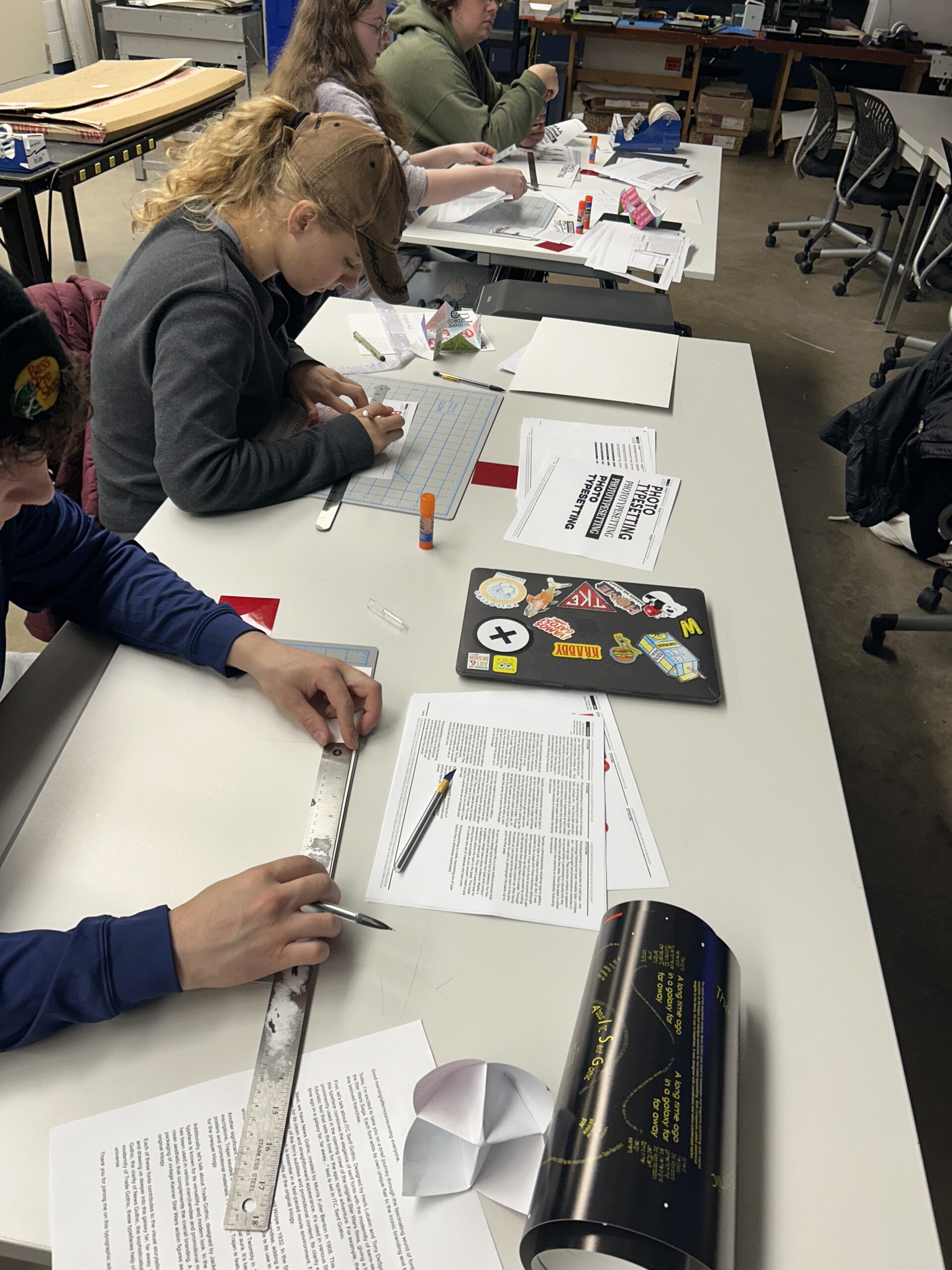
Three things came up consistently. First, working at actual size changed spatial awareness in a way that screen-based zooming doesn’t — participants made different decisions about hierarchy and breathing room when they couldn’t just zoom out to check. Second, the tactile feedback of physically moving elements encouraged more iterative adjustment than a digital workflow typically does; there’s something about being able to pick a piece up and slide it that makes you more willing to try something. Third, the absence of infinite undo pushed more deliberate decision-making from the start.
None of this is an argument for abandoning digital tools. It’s an argument that analog methods can function as a prototyping layer — a way to work through spatial relationships before committing them to screen.
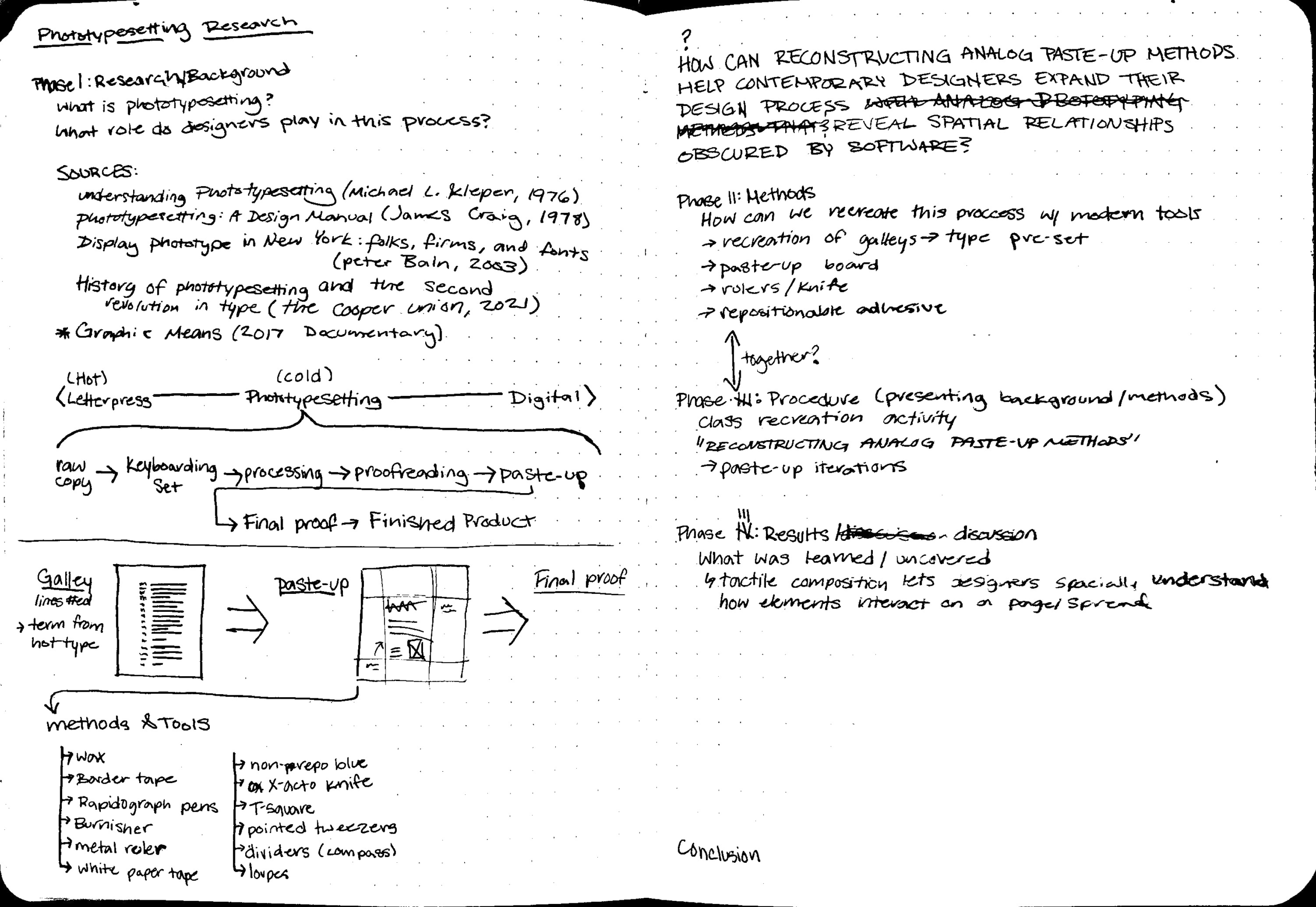
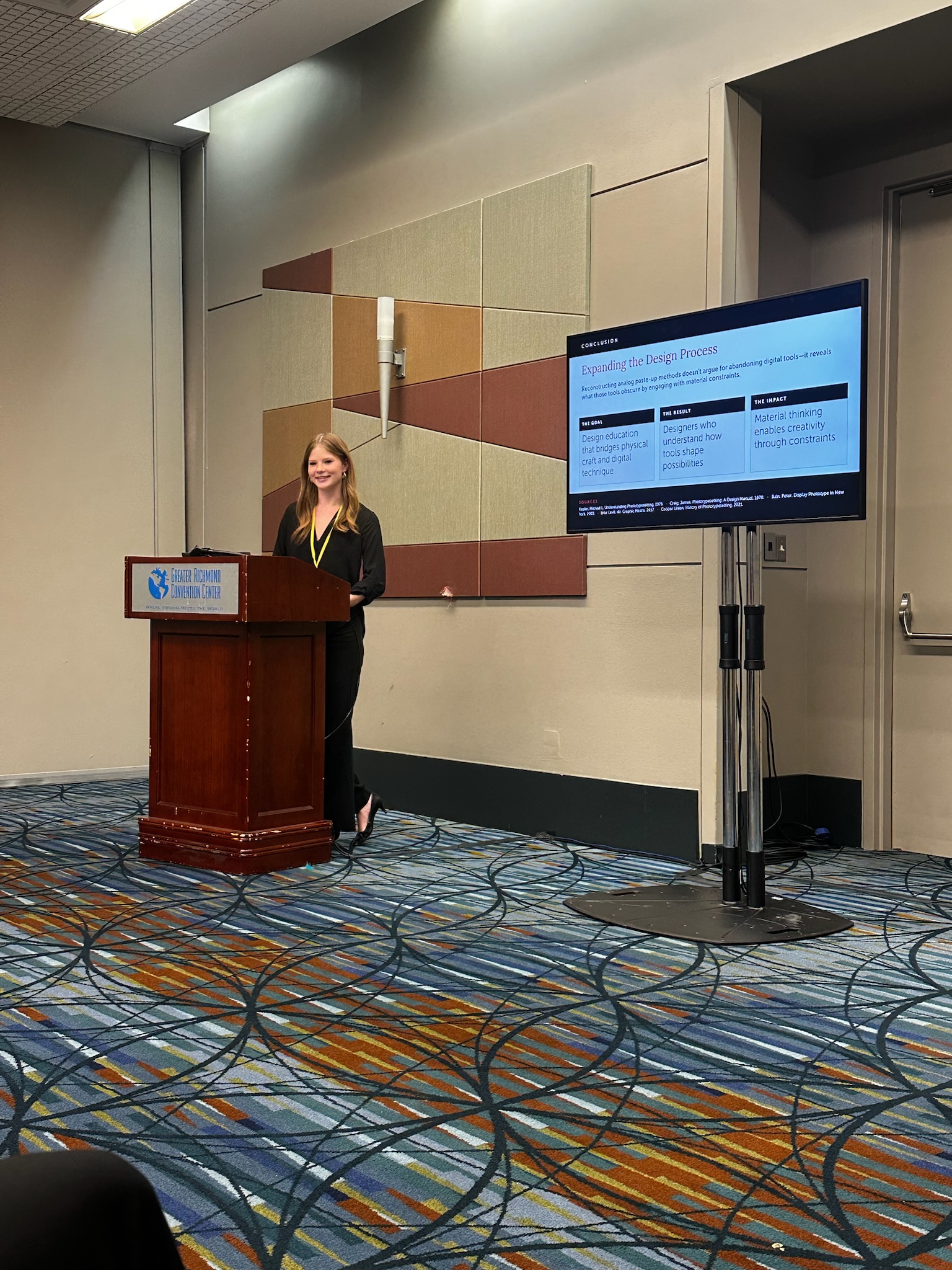
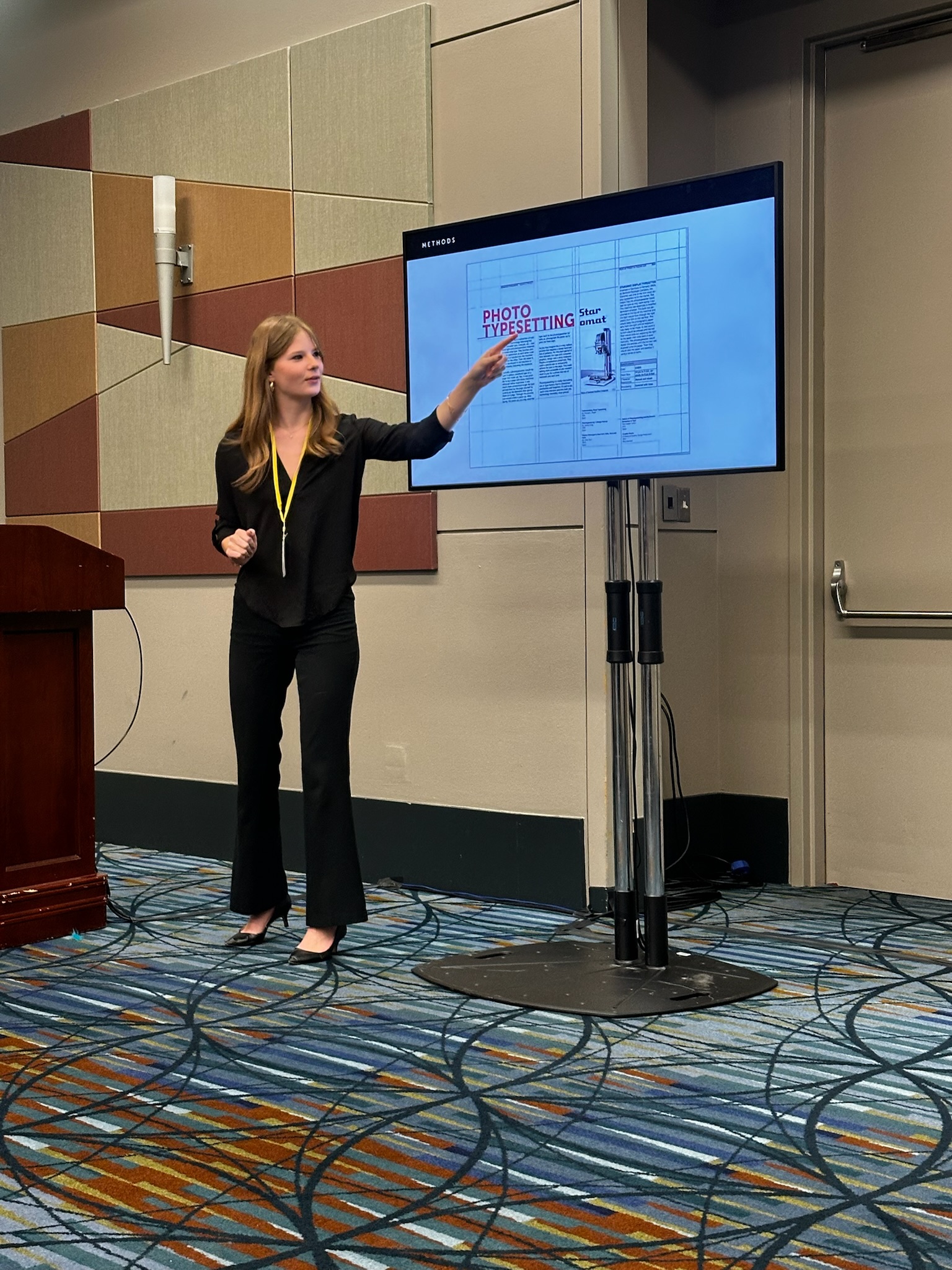
This research was presented at NCUR 2026. The bigger takeaway for my own practice: the constraints that once felt like limitations were actually doing compositional thinking for designers. Building some of that friction back in, even artificially, produces more considered work.